
|
A rare (according to our guides) desert thunderstorm during the evening prior to the eclipse on top of continuous overcast, haze, and high humidity throughout Asia (common at this time of the year) during our trip set the stage for what was to come. 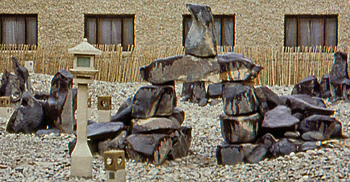
|
|
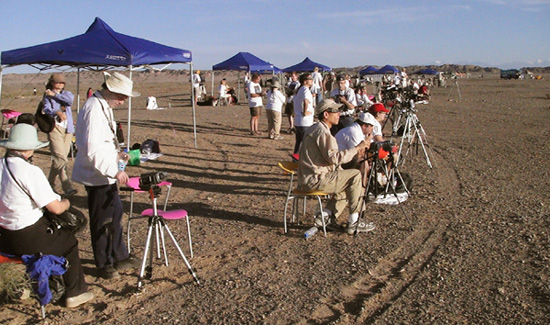
The Olympics and its associated politics had already had its effect -- cancellation of our pre-trip extension to Tibet and tight security everywhere. To top it off, a government mandated last minute change forced on our group to move to a new observing site, taking us eastward, closer to the end, and farther off the centerline of the eclipse path.
|
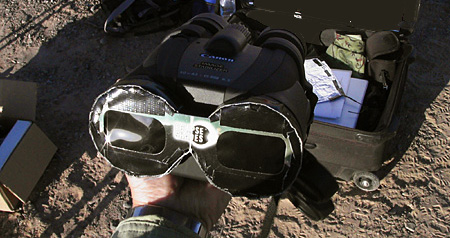
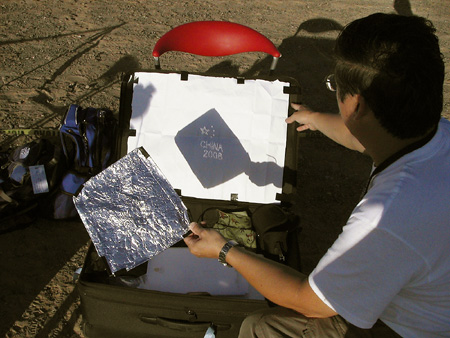
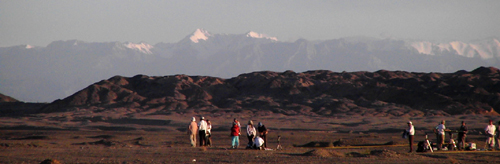
The effect of the site change was to reduce this already short eclipse down to 97 seconds of totality and place the sun even closer to the horizon than previously planned. However, the upside of moving closer to the edge of the moon's shadow was the possibility of an enhanced display of Bailey's Beads which happen as the last bits of the bright surface of the sun can be seen between mountain peaks on the edge of the moon. To make the best of the situation, I decided to concentrate my shots on rapid sequences of short exposures at the 2nd and 3rd contacts instead of trying to get long exposures of the outer corona. Dawn at our hotel in Dunhuang did not do much to alleviate fears of being clouded out. The overnight thunderstorm was gone and the ground had dried out, but cloud cover was still fairly heavy. However, one benefit of the 6 hour bus ride to the actual observing site near the town of Jinta was that we were fortunately moved into an area relatively free of clouds (unlike some other unfortunate eclipse observing groups). The sun itself surprisingly showed nothing at all on its surface even in a telescopic view so the partial phases were perhaps a bit less interesting than usual. But in the end, wind and dust were really the only negatives that plagued us for the actual eclipse, and we were treated to a nice view of totality with a good show of Bailey's Beads and eclipse colors tinted by the approaching sunset. An additional bonus was that the low elevation of the sun made the cone of the moon's shadow obvious in the sky as it swept past us.
|