|
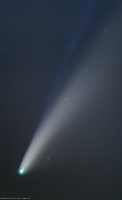
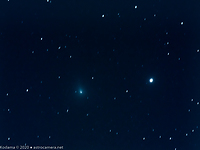
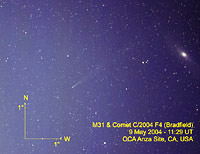
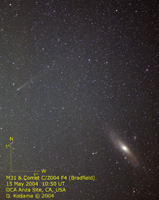
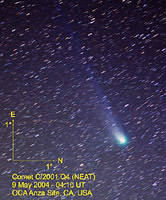
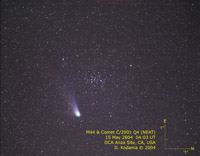
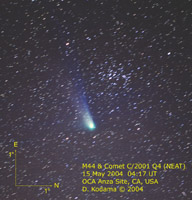
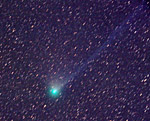
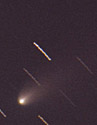
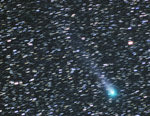
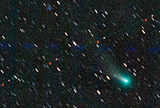
Comets make interesting challenges for astrophotographers
because each comet has a unique look to it, depending on
its composition, orbit, and distance from the Earth.
There is a certain anticipation with each one when it nears
the sun as we hope for a good show.
For the most part, comets pass by us only once, and even
if they do come back, the vast majority are seen only
once in a lifetime. They do hang around long enough
(unlike meteors) to give us a few chances to take
photographs, but have their own challenges - generally
they are near the sun (sunrise or sunset) and low in the
sky. The combination of a bright, changing sky background
coupled with a faint wispy tail keeps the challenge
fresh for each comet.
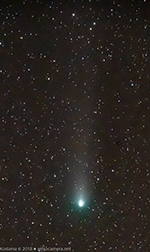
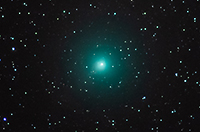
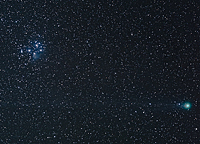
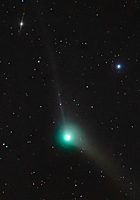
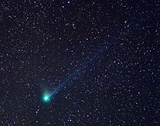
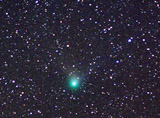
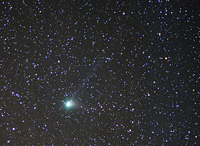
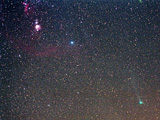
Here are a few that have come by and
become bright enough (and some not so bright) to put on a show:
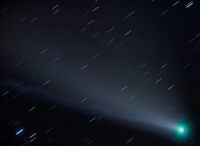
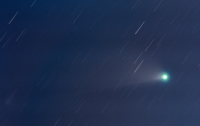
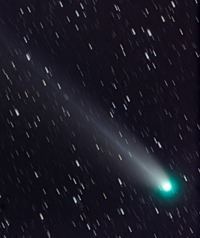
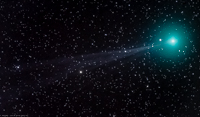
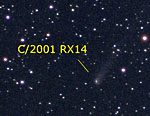
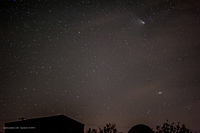
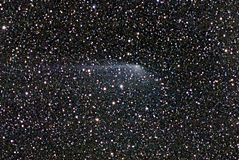
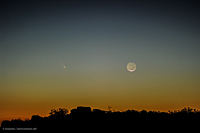
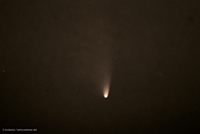
C/2011 L4- Comet Panstarrs
|
|
|
| 4 Apr. 2013 |
8 June 2013 |
|
|
| 12 Mar. 2013 |
16 Mar. 2013 |
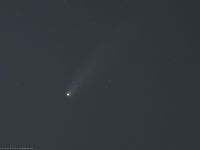
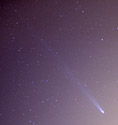
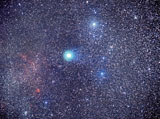
Comet C/2009/ P1 (Garradd)
|
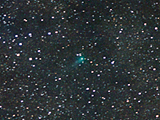
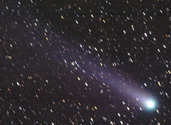
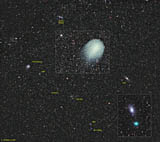
Comet 17P (Holmes)
|
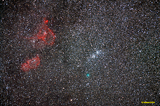
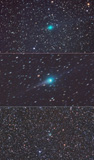
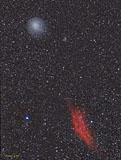
Comet 17P (Holmes)
and Comet 8P (Tuttle)
|
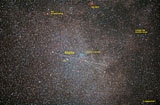
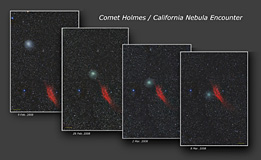
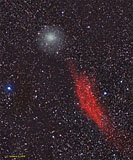
Comet 17P (Holmes) & the California Nebula
|
|
|
|
|
| Nov.-Dec. 2007 |
30 Dec. 2007 |
9 Feb. 2008 |
26 Feb. 2008 |
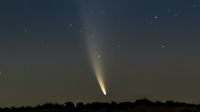
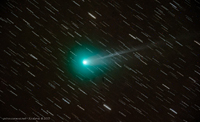
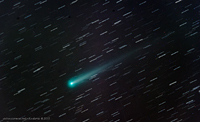
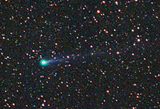
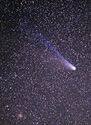
Comet C/2006 P1 (McNaught)
|
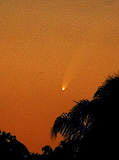
|
|
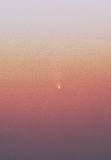
|
| 12 Jan. 2007 |
|
13 Jan. 2007 |
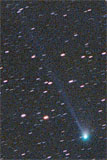
|
|
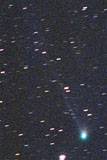
|
|
|
| 20 Oct. 2006 |
|
21 Oct. 2006 |
|
28 Oct. 2006
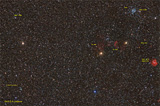
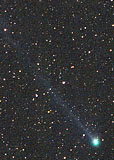
Comet SWAN & M13 |
Comet FAQ's
- Why are there several comets named "LINEAR"?
An increasing number of comets are being discovered
by automatic (robot) telescopes which are engaged in
searching for potentially earth-threatening asteroids.
LINEAR is one such project.
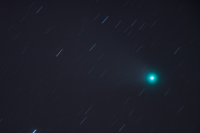
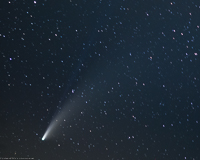
- Why do I see two tails on some comets?
As comets approach the sun, the energy
from the sun causes the outer layer of
the comet to warm up and boil off the
comet's surface. Some components of it
also become electrically charged and
interact with the sun's solar wind. This
fluorescing ion tail is generally thin,
usually looks blue in color photos,
and generally streams straight away from
the direction of the sun.
The uncharged particles are mainly pushed
and lit up by sunlight and appear as a
white or yellow diffuse cloud trailing
from the comet head. Solar radiation
pressure "blows" the dust outwards, with
smaller particles affected more than
larger particles, causing the cloud to
spread out in a broad fan.
In either case, note that you can't tell
the direction of motion of the comet by
the orientation of the tail.
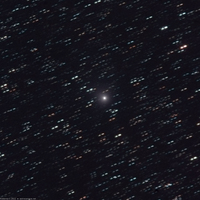
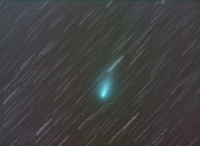
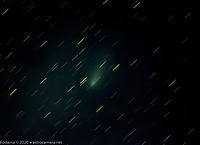
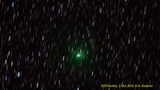
- Why are the stars trailed in comet photos?
Comets are usually moving fast enough relative to the
stars that the camera must follow the comet during the
exposure, causing the stars to appear as lines. The
bigger and brighter the comet, and the faster the
camera system, the less trailing will be visible
in a photo.
- Why don't I remember hearing about these comets?
Most comets come and go without being noticed by
the general public because they don't become bright
enough to be visible without binoculars or a telescope,
especially when drowned out by the lights of a city.
At any given time, there are perhaps a half-dozen
comets visible in amateur astronomers' telescopes,
most as just dim fuzzy balls without a distinct tail.
|
|