|
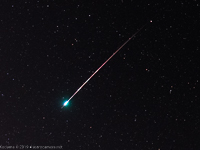
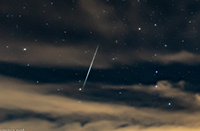
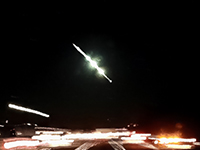
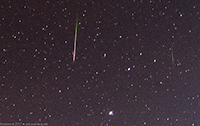
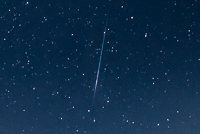
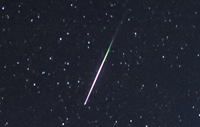
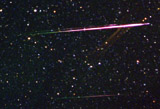
Catching a meteor on film is an interesting and challenging
specialty of astrophotography. Although at a dark
location we may see several meteors flash by even when a
meteor shower is not in progress, most of these are so dim
that they are a challenge to record. Even when a
shower occurs, a rate of one a minute is considered a healthy
shower. Meteor storms (up to several meteors per second)
are once-in-a-lifetime viewing events, especially if
they are not predicted ahead of time.
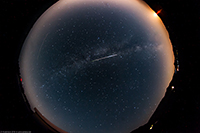
Adding to the photographic challenge is the fact that
most ordinary camera lenses cover a relatively small
part of the sky. Special wide angle lenses can cover
more of the sky, but typically they reduce the
sensitivity of the camera system and/or cost much more
than normal lenses. Throw in a bright moon and things
really get difficult. Nevertheless, one can still be
lucky!
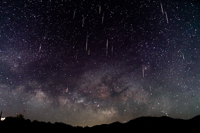
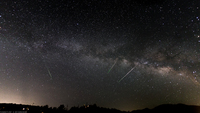
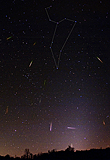
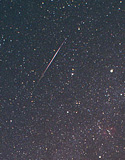
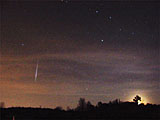
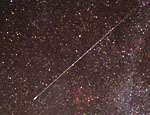
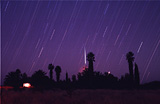
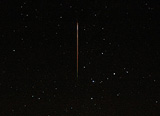
Leonid Meteor Shower
This meteor shower deserves special mention
as it has historically put on a good show every
33 years or so. As in the case of many regular
meteor showers, it is associated with a short
period comet. Each year the earth passes near
the orbit of the comet and its debris, but in
addition, about every 33 years, the comet main
body and denser debris cloud is in our
vicinity, making an exceptional meteor shower a
possibility. This was the case for the
1998-2002 period.
|
|
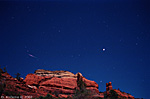
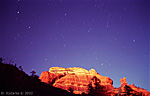
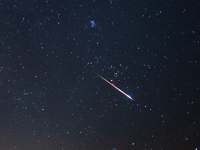
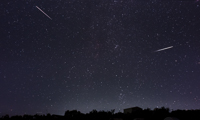
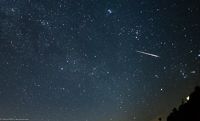
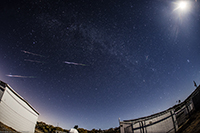
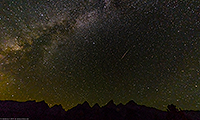
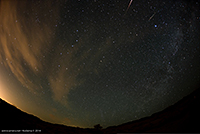
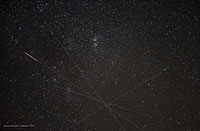
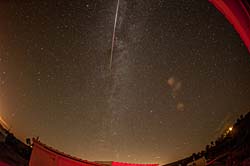
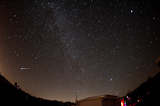
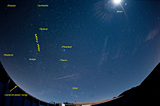
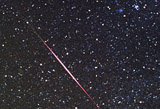
2002 Leonids
Under the Full Moon
|
|
|